B2C ✶ UX ✶ STRATEGY
PROJECT OVERVIEW
Software Development
Solo
UX Researcher
10 weeks
I worked with a software development company providing various financial and healthcare solutions. During my UX internship with them, their hospital meal ordering app piqued my interest.
All visuals and workflows have been anonymized to comply with the NDA.
PROBLEM
Inaccessible resources during onboarding
Internal stakeholders pointed out the hospital meal-ordering app's frustrating workflows. I hypothesized that patients relied on staff guidance for onboarding; research goals explored opportunities for better self-service.
I decided to conduct focused evaluations of both physical and mobile onboarding processes.
RESEARCH FOCUS
Three research focuses
[1]
Patient-product awareness
How do patients onboard onto the hospital meal-ordering app?
[2]
Resource sufficiency
What resources do users use, and to what extent?
[3]
UI Touchpoints
What touchpoints, if any, could the UX be largely improved with simple fixes?
APPROACH
Internal conversations lead to insight
I interviewed people from product, design, and support teams and identified three widely-agreed-upon touch points that caused user difficulty. To confirm that these touch points were the biggest issues, I decided to conduct a set of unconventional user interviews.
I created an interactive simulation on Figma that placed users in a hospital setting to experience the onboarding flows in a choose-your-own-adventure format.
USER TESTING
Observing user interactions with both physical and mobile environments
Users accessed the app through staff, printed materials, or environmental cues. They were told to navigate the virtual environment to find ways to place a hospital meal order.
fig 1. Choice: printed materials
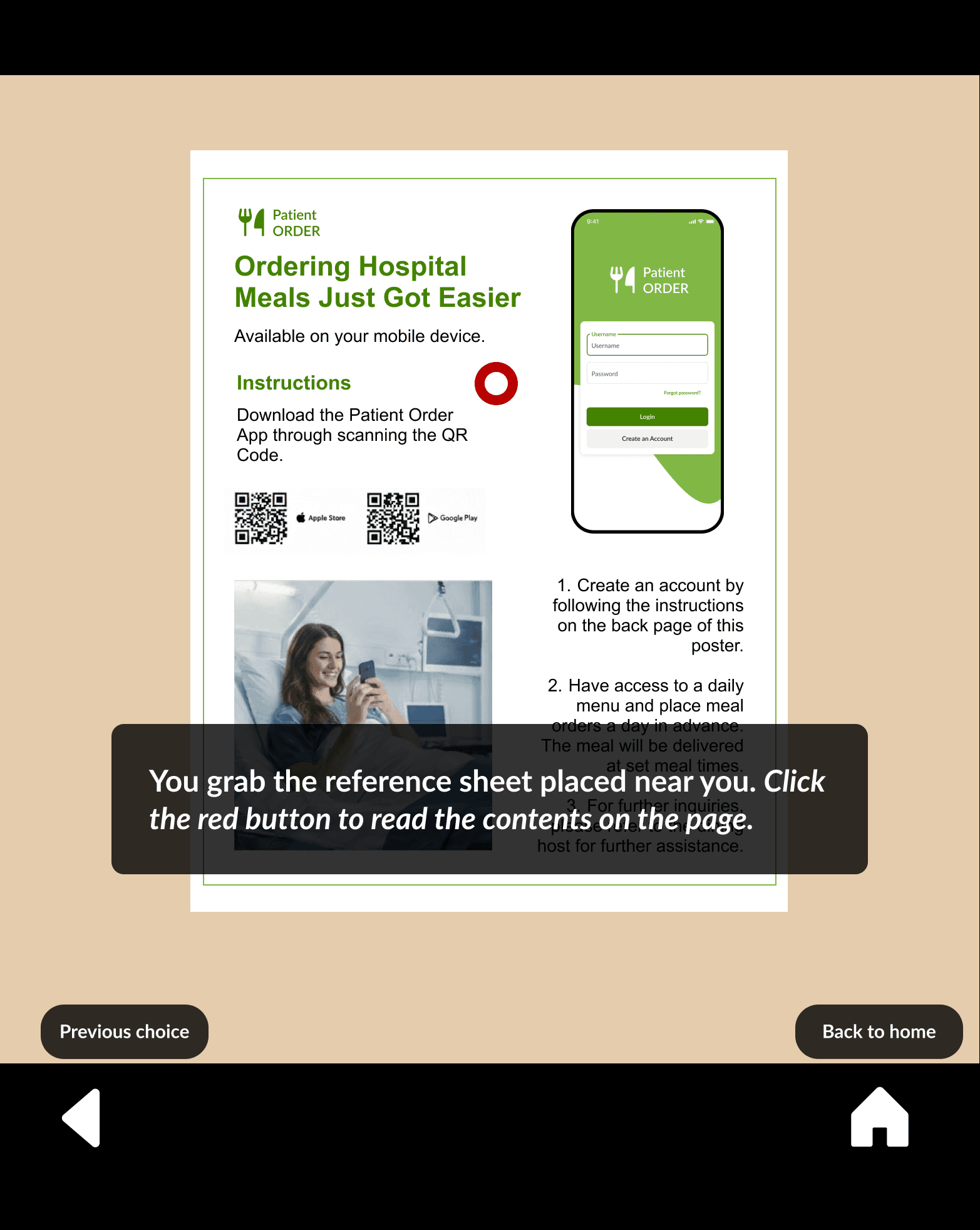
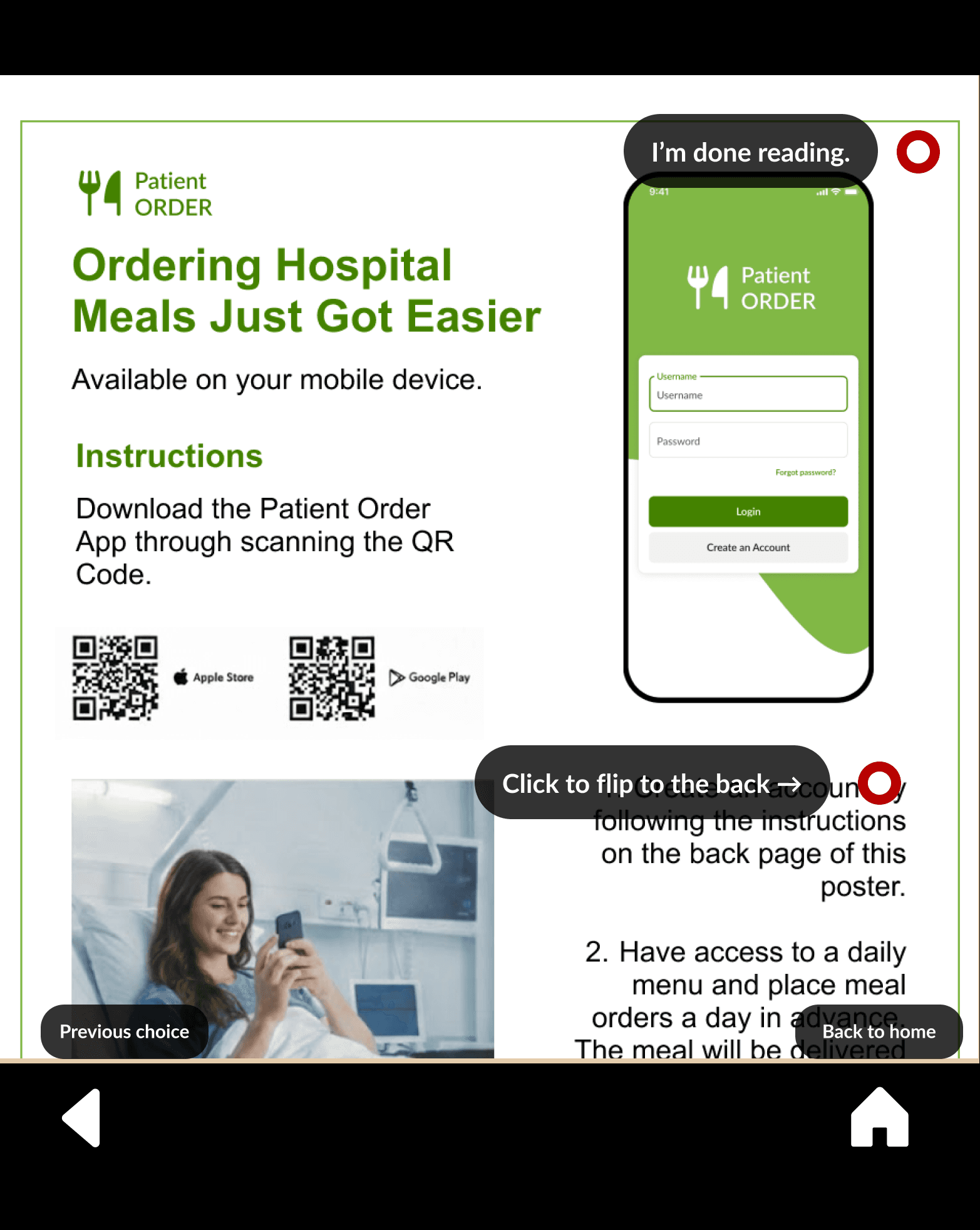
fig 2. Choice: staff interference
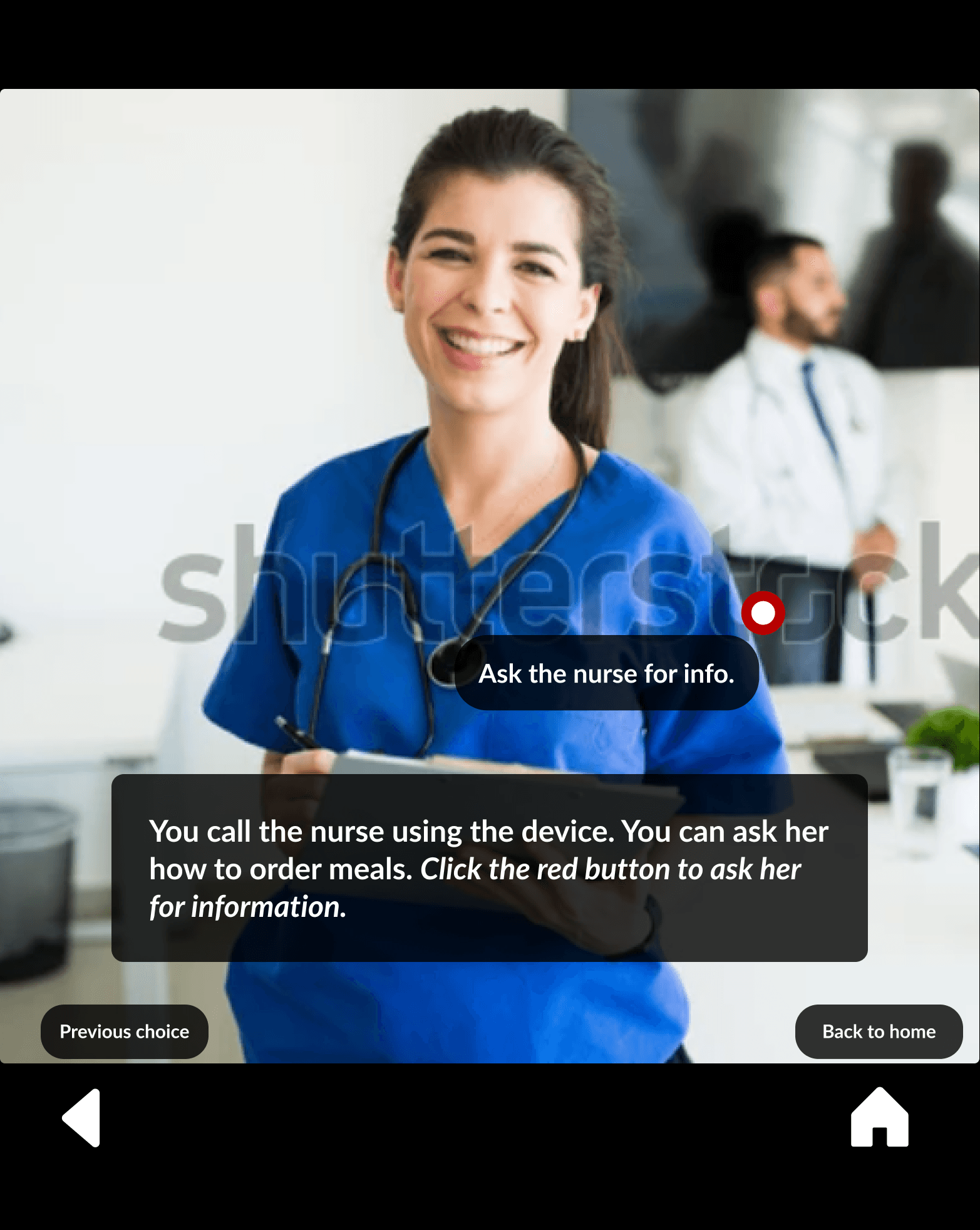
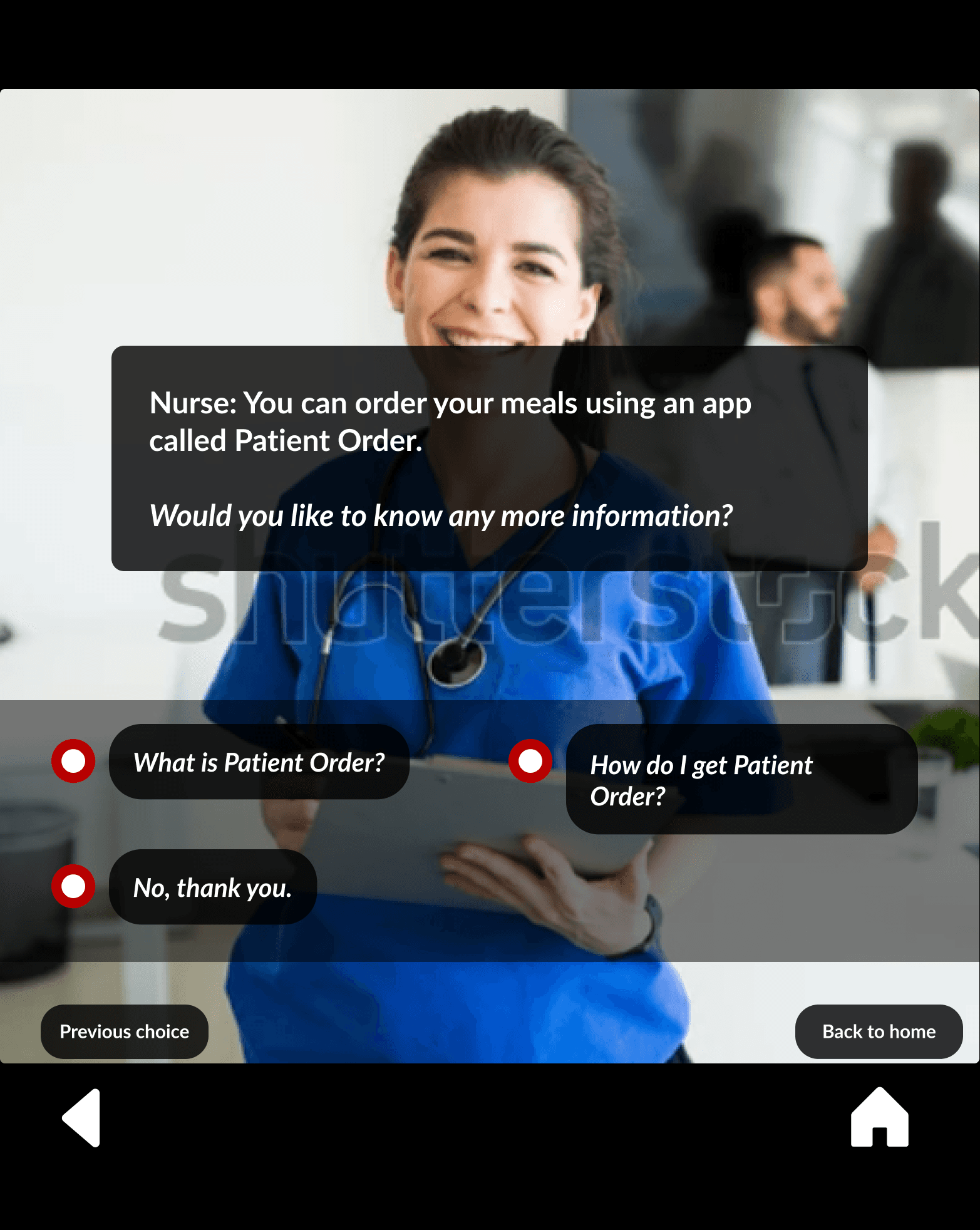
Users struggled to locate essential info for self-identification and hospital identification needed during onboarding. To test which touch-points lacked information resources, I created conceptual Figma screens to test user interactions and identify opportunities for improvement.
SYNTHESIS
Grouping friction points and finding overlaps
I wrote down each user action taken during their respective sessions and wrote them down on post-it notes. Noting those with similarities, I grouped each finding by pain points.
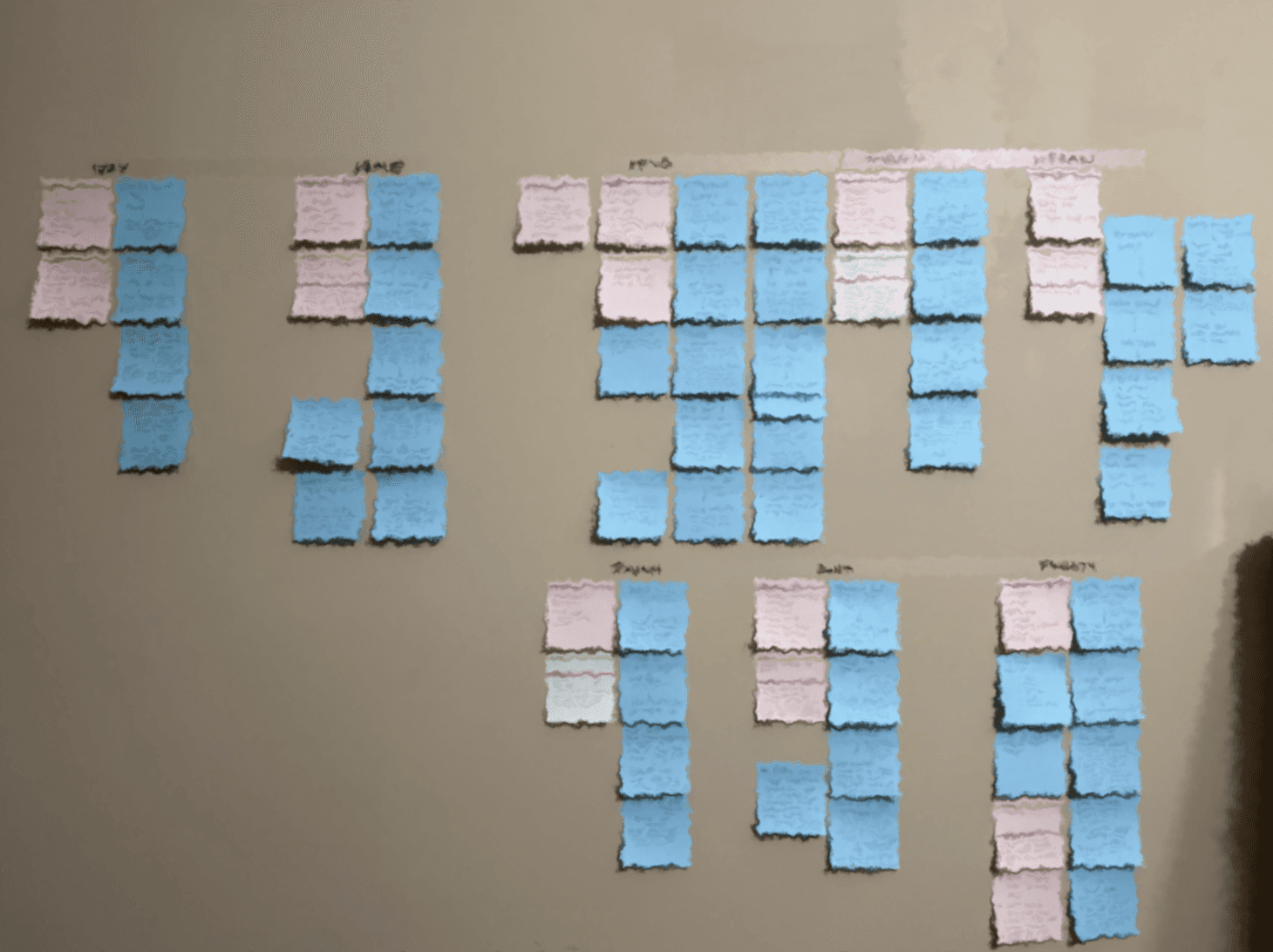
Common trends emerged:
STRATEGY
Prioritizing next steps
Patterns in user friction consistently surfaced two design priorities.
[1]
Strengthening self-serve resources to support independent use
[2]
Improving usability of key onboarding touchpoints
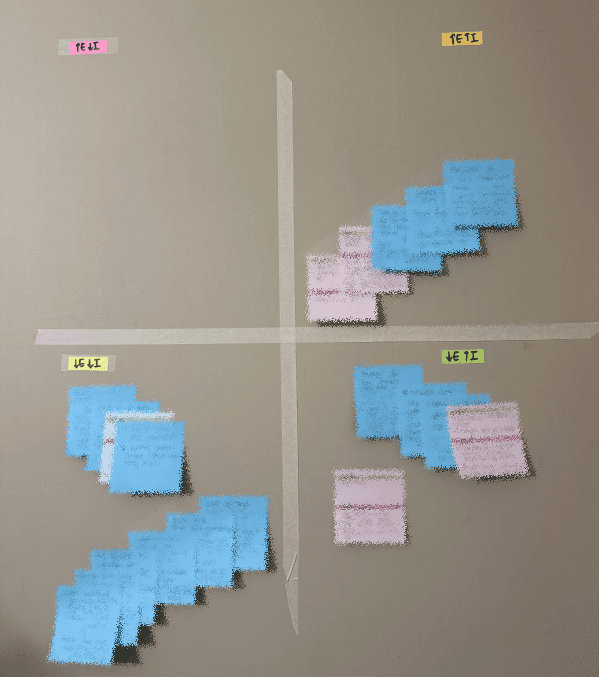
I prioritized the grouped user feedback into an Impact/Effort matrix which informed solutions across immediate, short-term, and long-term scopes:
SOLUTION
Improving info access and addressing immediate fixes
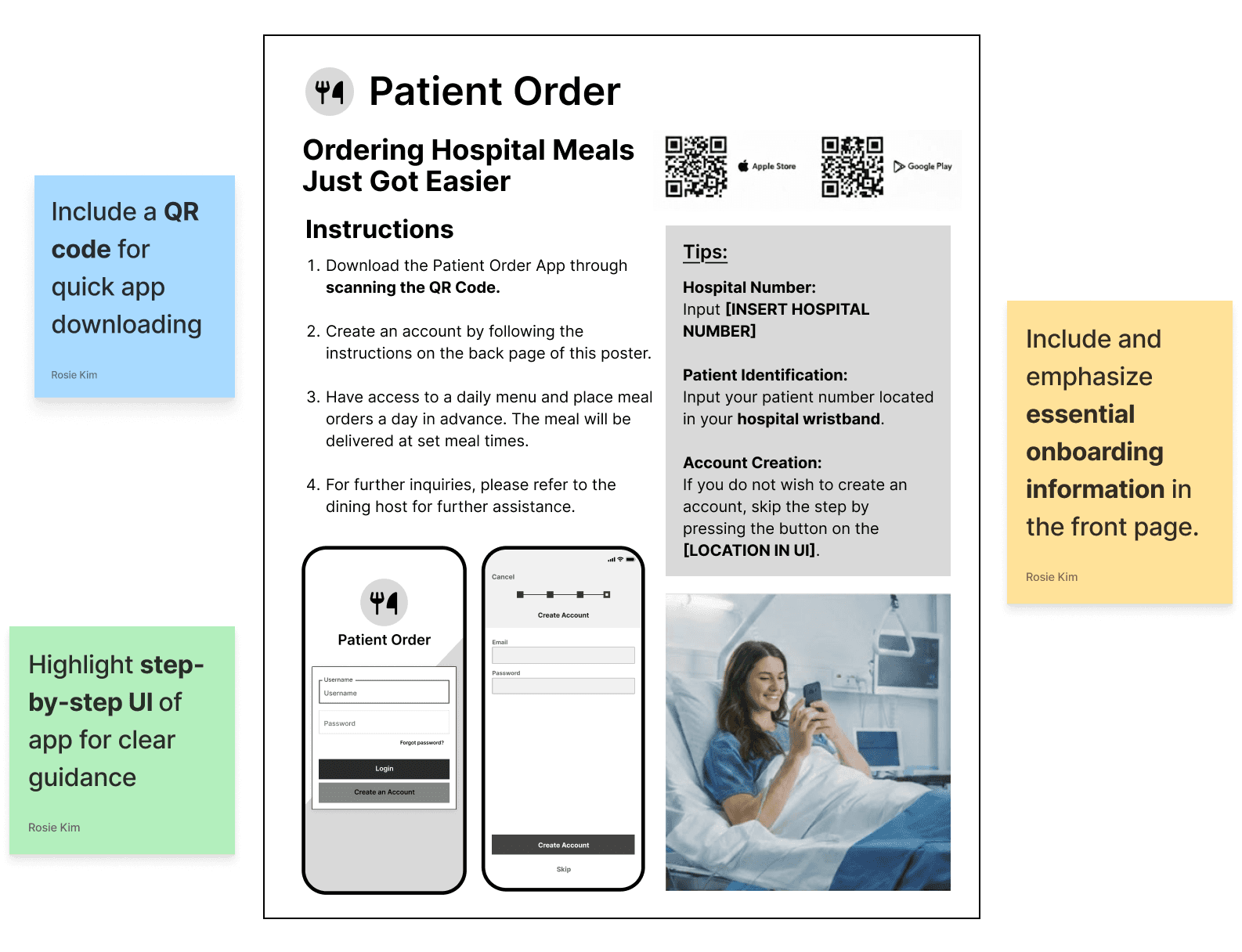
Solution [1]: Marketing guidelines to help patients identify key information faster
Use clear visual cues to make critical information easy to find.
Make patient-facing materials easily accessible for self-guided onboarding.
Solution [2]: Contextualizing account creation steps
Many users were averse from creating an account with the app for multiple reasons. It was a slow process, a tedious step, and an additional concern for privacy.
The step was missing three key things:
Context
Efficiency
Transparency
I needed to provide users with the choice for efficient onboarding, whilst keeping the tradeoffs completely transparent.
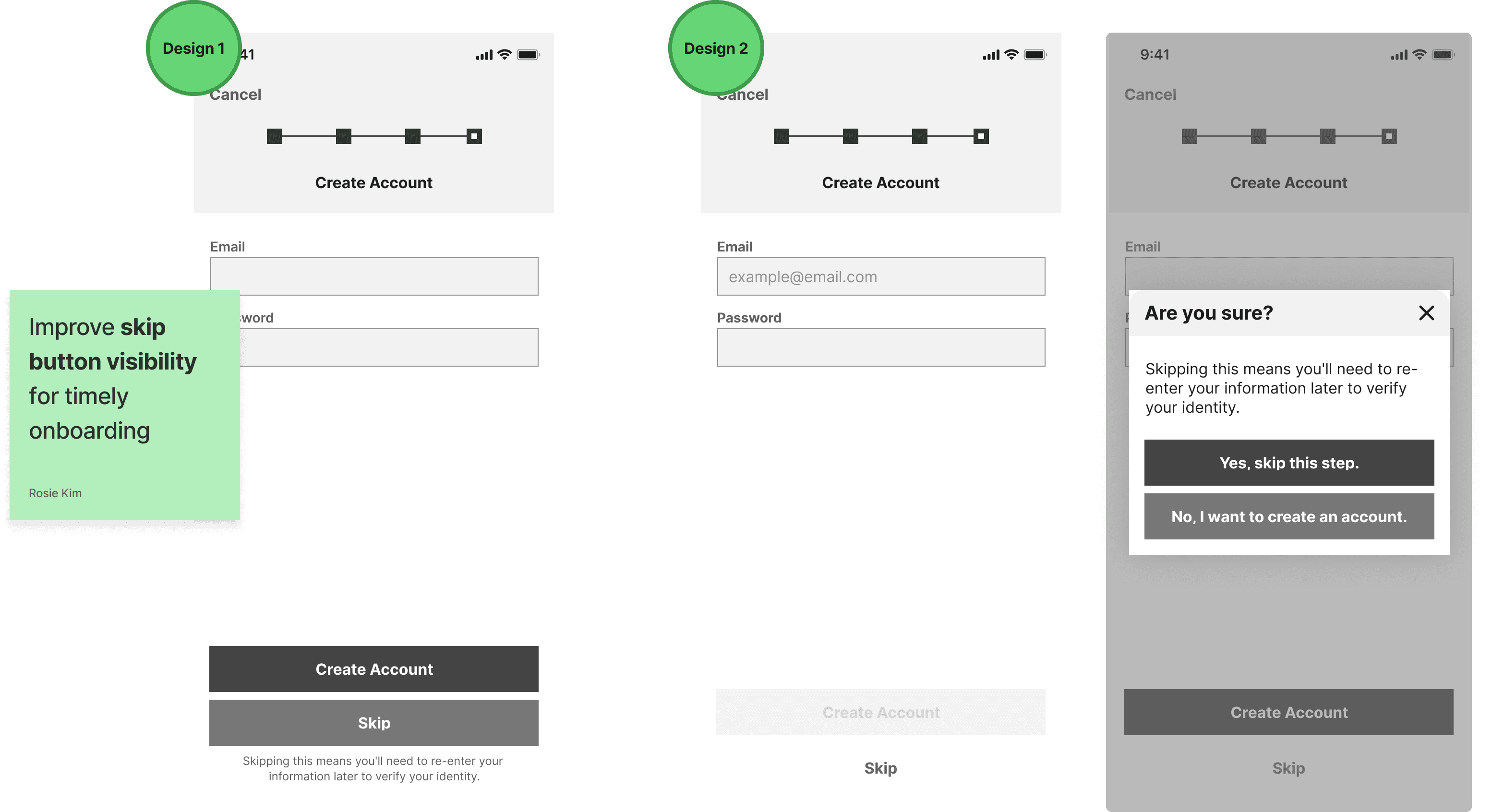
Context Pop-up
Context Underneath
But I was aware this was only a temporary fix— we needed to completely redesign onboarding if we wanted to avoid continuous user friction.
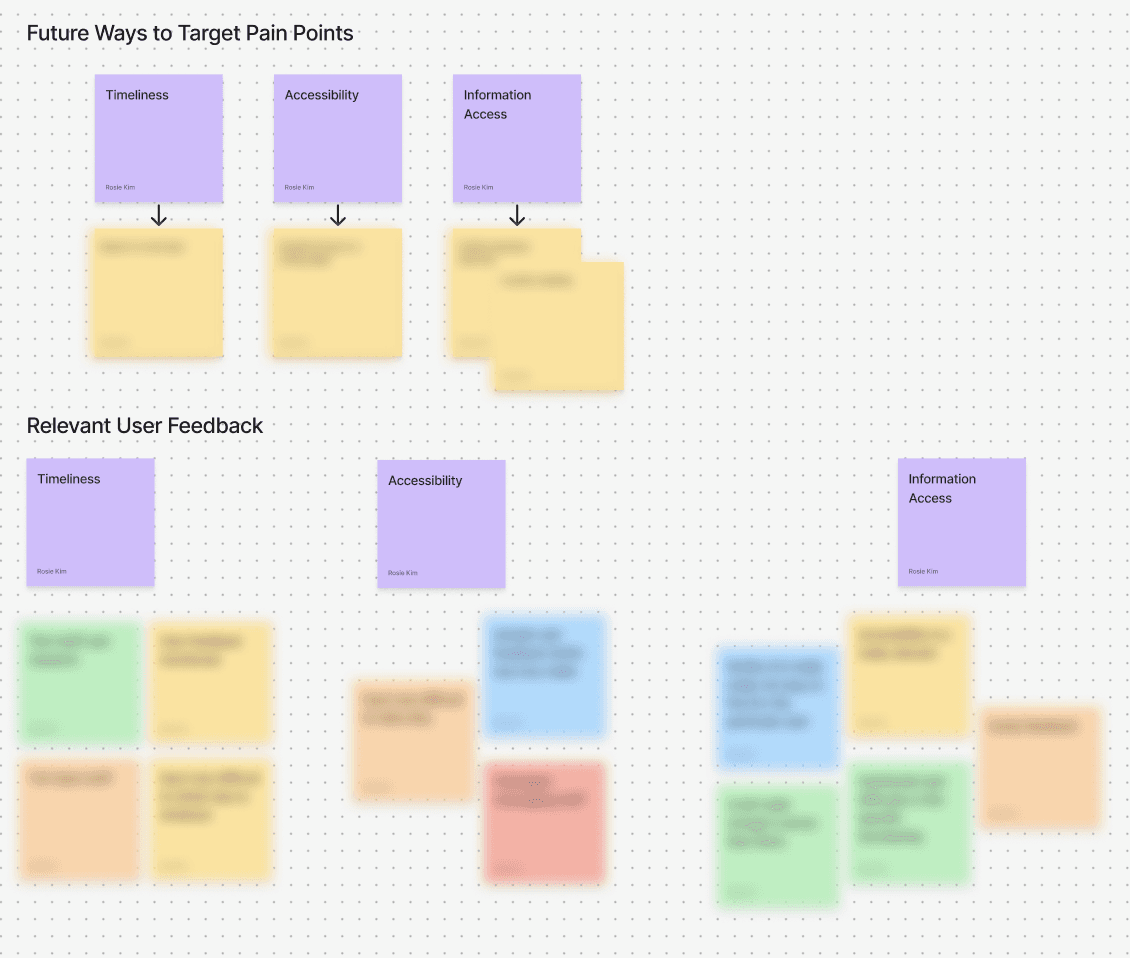
Visualizing a larger transformation for the future
I grouped user insights that would warrant larger projects into explorations of long-term, transformative changes for the onboarding experience. Many of them indicated a need for entire user flow redesigns in the future.
REFLECTION
Building empathetic healthcare solutions
Takeaways
Visualizing all contexts — UX doesn't stop at the screen. When evaluating how customers felt and experienced this product, I had to consider the environment outside of their mobile devices as well.
Opening up — Structure is important for an interview, but so is adaptability. Users were more eager to share insights when I opened up the floor.
The power of data — UX with no research is shooting darts while blindfolded. Having the research results at my fingertips allowed me to make more confident decisions.
Outcomes
I presented my findings to stakeholders, influencing marketing, product, and UX teams. Marketing implemented my patient-facing material updates across hospital facilities. Product moved forward with key UI redesigns, and UX built a two-day workshop around my research. My work established a framework that continues guiding design decisions and improving patient experience.
With more time, I'd explore demographic-specific behaviors, A/B test the implementations, and investigate additional research opportunities that surfaced.